What's Included in a House & Land Package in WA? (And What Isn't)
Understand what may be included in a house and land package, what often isn't, and the important details to check before you sign.
Two packages can advertise a similar price and still be thousands of dollars apart once you read what each one actually covers. The land and the build are the straightforward part. The difference usually sits in the detail — whether site works have been priced for your specific block, whether there is flooring in the bedrooms, whether you can move in without first arranging a driveway.
This guide walks through what a house and land package can include in Western Australia, what is commonly left out, and the questions worth asking before you commit to anything.
One thing to keep in mind throughout: inclusions vary between builders, developers, estates and individual packages, and they can vary between two packages from the same builder. Nothing below is a description of what every WA package contains. Treat it as a checklist to take to a specification document.
If you are buying your first home, it is worth reading this alongside our first home buyer guide, which covers the wider process rather than just the inclusions.
What is a house and land package?
A house and land package brings together two purchases that would otherwise happen separately: a block of land, and a home built on it.
In practice this usually takes one of two forms. Sometimes the land and the build are contracted separately — you buy the block, then sign a building contract for a home designed to fit it. Sometimes they are presented as a single arrangement, particularly in newer estates where a builder and a developer are working together on specific lots.
The distinction matters more than it first appears, because it affects when you pay for what, and which contract governs which part of the work. Ask early which structure you are looking at.
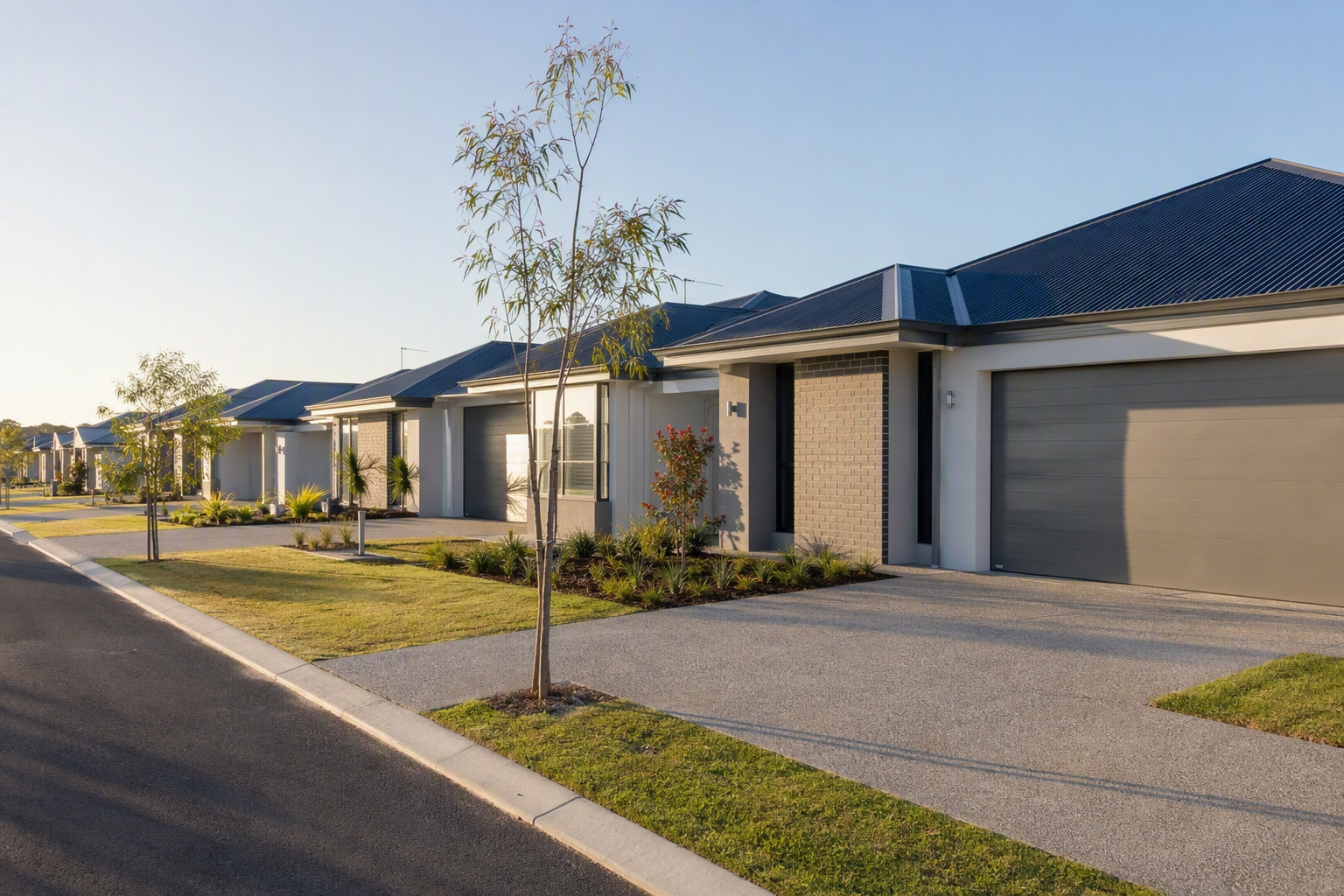 A package pairs one specific lot with one specific home design. What any individual package covers is set out in its own specification, not in photographs.
What can be included in a house and land package?
The items below are the ones most often bundled into a package. Whether any particular one is included in your package is a question for that package's specification.
The block of land. The lot itself, at a stated size and dimension. Worth confirming: whether the land is titled and ready to build on, or whether titles are still pending.
The house design and build. A specific floor plan, at a stated number of bedrooms and bathrooms, built to the builder's standard specification for that design. Most builders offer variations, and variations generally change the price.
Site works. This is one of the most important line items to understand, and one of the most variable. Site works cover the preparation needed to build on your particular block — which can involve earthworks, retaining, drainage, sand pads or rock removal depending on the site. Some packages price site works for the specific lot. Others carry an allowance that is adjusted once the site has been assessed. An allowance is not a fixed cost, and the difference between the two approaches can be significant on a sloping or challenging block.
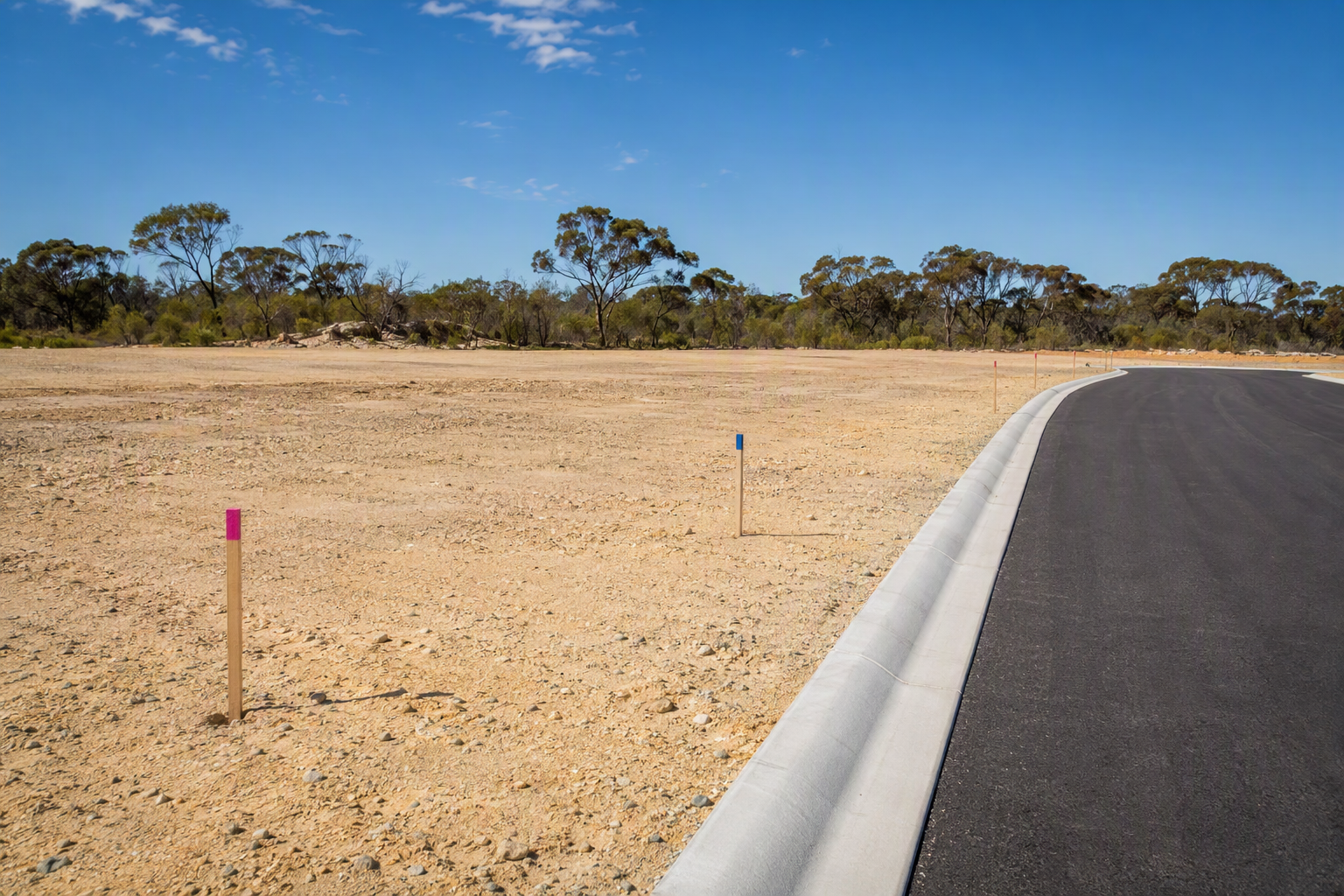 Site preparation depends on the individual block, so two packages at the same advertised price can carry very different site works costs.
Flooring. Sometimes included throughout, sometimes only in certain areas such as the living zone, sometimes not at all. If flooring is included, check which rooms and what type.
Painting. Internal painting is included in many packages, though the number of colours and whether it extends to all areas can differ.
Kitchen and appliances. A kitchen is a given; the appliance list is not. Ovens, cooktops, rangehoods and dishwashers are all items that may or may not appear, and the specification usually names models rather than just categories.
Bathrooms. Fixtures, tiling, shower screens and mirrors are typically specified in detail, including tiling heights, which is a common point of difference between packages.
Lighting and electrical. The number of power points, light points, data points and the type of light fittings supplied are all normally itemised. It is common for a base specification to include fewer points than most households end up wanting.
Driveway. Sometimes included, sometimes not. Where it is included, check the material and the area covered.
Landscaping. This varies widely — from front-yard landscaping only, to front and rear, to none. Reticulation and lawn may be treated separately from garden beds and plants.
Fencing. Boundary fencing may be included, partially included, or excluded. On a corner lot in particular, it is worth asking specifically.
Window treatments. Blinds and curtains are frequently excluded from a base package and included in more complete ones.
The pattern here is that the structural side of a package tends to be well defined, while the finishing items — the ones that determine whether a house is actually liveable on handover day — are where packages differ most.
What might not be included?
Rather than assuming, these are the items worth actively confirming:
- Site works beyond an allowance. If site costs are an allowance rather than a fixed price for your lot, the final figure can move.
- Flooring and window treatments. Two of the most common exclusions, and two of the more expensive to add after handover.
- Landscaping, fencing, driveway and paths. Any of these may sit outside the contract.
- Air conditioning. May be excluded, or included as a provision — a provision usually means the ducting or wiring is in place, not the unit.
- Solar. Frequently a separate item.
- Security screens, insect screens and letterboxes. Small items individually, and easy to overlook collectively.
- Clothesline, TV aerial, and additional storage such as shelving to robes.
- Upgrades shown in display homes and renderings. Display homes commonly showcase upgraded finishes. Marketing images are not a specification.
- Government fees and charges, settlement costs, and any finance-related costs. These sit outside the build itself and depend on your circumstances, so seek advice specific to your situation.
What does "turnkey" mean?
"Turnkey" describes a package intended to be complete enough to move into on handover — the idea being that you turn the key and the home is finished.
In practice, turnkey is a marketing term rather than a defined standard. There is no single specification that all turnkey packages meet. One builder's turnkey may include flooring, blinds, landscaping, fencing and a driveway. Another's may include some of those and not others.
So the term is a useful starting signal, not an answer. If a package is described as turnkey, the productive next question is simply: what specifically does that include here? Then read the inclusions list against it. A package described as turnkey with a short inclusions list may cover less than a package that does not use the word at all.
Questions to ask before you choose a package
Worth taking to any package you are seriously comparing:
- Is the site works cost fixed for this specific lot, or is it an allowance? If it is an allowance, what happens if the assessed cost is higher?
- Is the land titled? If not, when are titles expected, and what does that mean for the build start?
- Can I see the full inclusions specification in writing — not the brochure summary?
- Which rooms get flooring, and what type?
- Are blinds or window treatments included anywhere?
- Is landscaping included, and does it cover front, rear, or both? Is reticulation included?
- Is fencing included, and to which boundaries?
- Is the driveway included, and in what material?
- How many power points, light points and data points are in the base specification?
- Which appliances are included, by model?
- Is air conditioning included, or is it a provision only?
- What is the price basis — is this a fixed-price contract, and which items can still change?
- What is the estimated build time, and what happens if it runs over?
- What are the progress payment stages?
- Which items in the display home or images are upgrades?
If you are comparing several packages, ask the same questions of each and write the answers side by side. Packages that looked similar tend to separate quickly once the answers are lined up.
 Ask the same questions of every package you compare, and get the answers in writing rather than in conversation.
House and land packages around Kwinana
Buyers looking at Perth's southern corridor often end up comparing several suburbs at once rather than settling on one from the outset, because the corridor covers a mix of established areas and newer estates within a reasonably short distance of each other. Lot sizes, lot shapes and how far a development has progressed can all differ noticeably between neighbouring suburbs, and those differences feed directly into what a package needs to cover.
Site conditions are the clearest example. A flat, sand-based lot in a newer estate and a lot that needs retaining will not carry the same site works cost, even for the same house design at the same advertised price. That is why the site works question is worth asking per lot rather than per suburb.
Kwinana is the area we currently cover in most depth, and our page on house and land packages in Kwinana sets out what to look at locally. From there it is straightforward to compare the surrounding suburbs.
Looking for a package that suits your budget?
If you would rather not work through this alone, that is what HomeLot does. Tell us your budget, the areas you are considering and what you need in a home — number of bedrooms, whether you need a home office, how much outdoor space matters — and we will help you narrow down options that genuinely fit, rather than sending you a list to sort through yourself.
We are an independent information and enquiry service. We are not a builder or developer, so we have no reason to steer you toward one particular home.
When you are ready, tell us what you are looking for and we will take it from there.